Women's Black Hakama Skirt 'Namakuro'
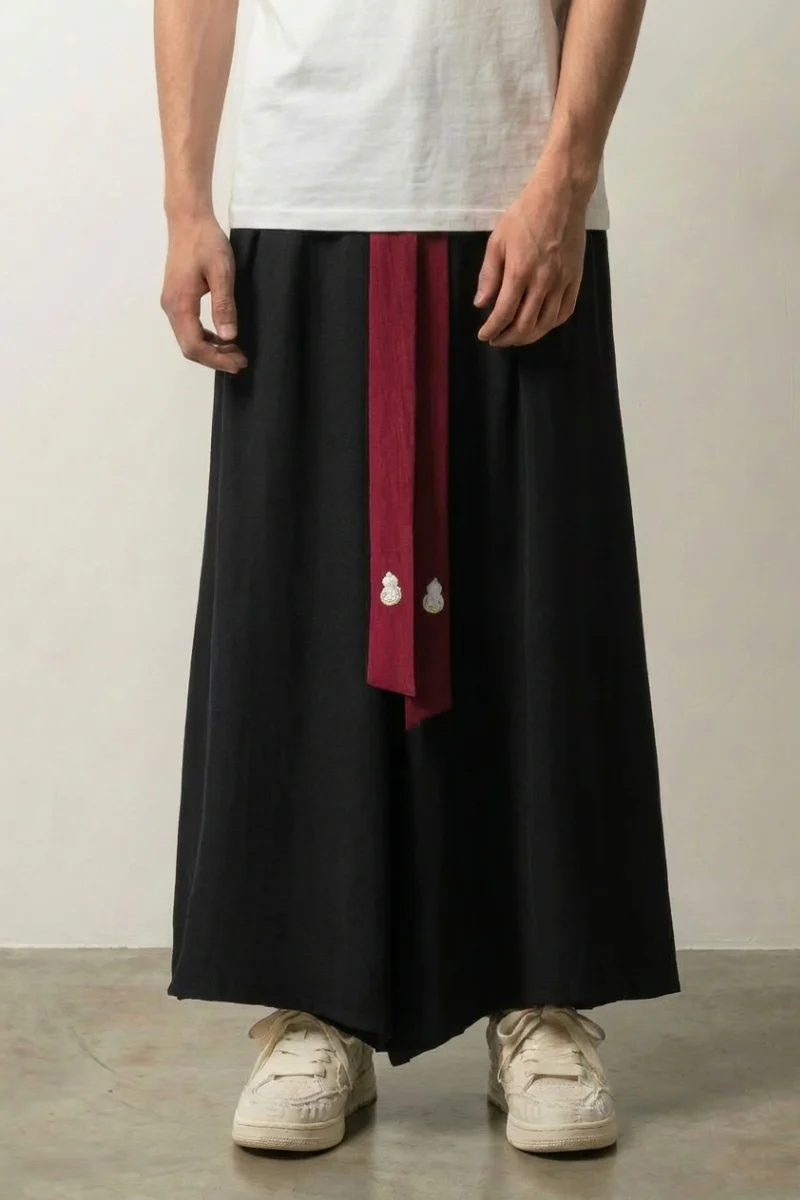
Women's Black Hakama Skirt with Asymmetric Hem and Clean A-Line Drape
Namakuro means raw black — nama for raw, kuro for black, the deepest colour in the Japanese textile spectrum, the one that absorbs light rather than reflecting it. The skirt borrows the silhouette of the traditional hakama and pares it down: no pleats, no internal divider, just a long A-line cut with an asymmetric hem that opens slightly toward the front. The black is matte rather than glossy, the kind that holds its tone in any light. It reads as the most architectural piece in the line.
The cut is high-waisted with a wide elastic band, sitting just below the natural waist for comfort. The hem falls to mid-calf, slightly longer at the back, slightly shorter at the front — the kind of asymmetry old Japanese textile dyers used to balance volume against movement. The fabric is a cotton-blend weave with a natural matte finish, breathable in summer and layerable in cooler months. Sizes run M, L, XL and XXL; the silhouette stays loose at the hem, fitted at the waist.
You get the skirt as a single piece. The colour holds its tone through regular wear and gentle hand-washing. No costume packaging, no plastic accessory clutter — just one garment, ready to be folded into your wardrobe alongside the rest of what you actually wear.
Wear it with a white tee and worn-in trainers for a quiet weekend, or with a black turtleneck and leather boots when the rest of the outfit goes monochrome. It pairs naturally with a long coat for winter, with a denim jacket for spring, with bare ankles in summer. There are two Japans in every wardrobe; this one leans toward the after-dark side — Shinjuku alleys more than temple gardens.
Original: $55.00
-65%$55.00
$19.25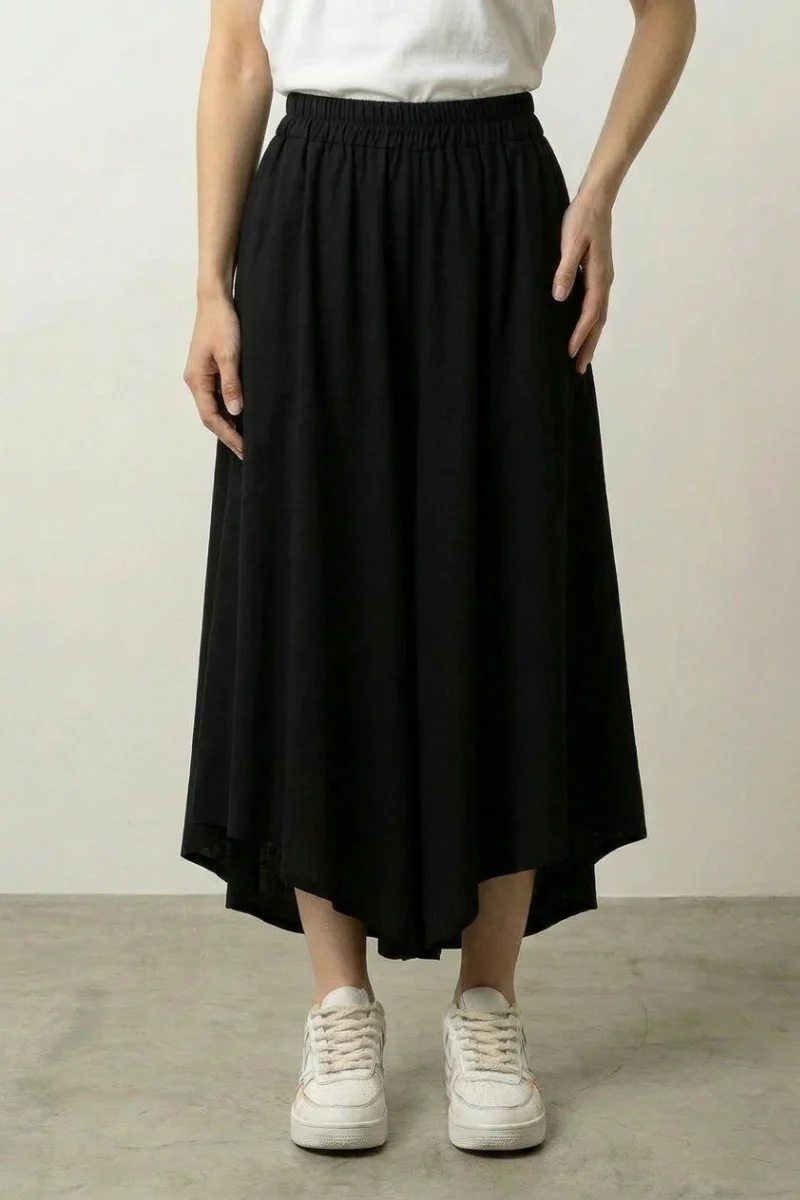
Description
Women's Black Hakama Skirt with Asymmetric Hem and Clean A-Line Drape
Namakuro means raw black — nama for raw, kuro for black, the deepest colour in the Japanese textile spectrum, the one that absorbs light rather than reflecting it. The skirt borrows the silhouette of the traditional hakama and pares it down: no pleats, no internal divider, just a long A-line cut with an asymmetric hem that opens slightly toward the front. The black is matte rather than glossy, the kind that holds its tone in any light. It reads as the most architectural piece in the line.
The cut is high-waisted with a wide elastic band, sitting just below the natural waist for comfort. The hem falls to mid-calf, slightly longer at the back, slightly shorter at the front — the kind of asymmetry old Japanese textile dyers used to balance volume against movement. The fabric is a cotton-blend weave with a natural matte finish, breathable in summer and layerable in cooler months. Sizes run M, L, XL and XXL; the silhouette stays loose at the hem, fitted at the waist.
You get the skirt as a single piece. The colour holds its tone through regular wear and gentle hand-washing. No costume packaging, no plastic accessory clutter — just one garment, ready to be folded into your wardrobe alongside the rest of what you actually wear.
Wear it with a white tee and worn-in trainers for a quiet weekend, or with a black turtleneck and leather boots when the rest of the outfit goes monochrome. It pairs naturally with a long coat for winter, with a denim jacket for spring, with bare ankles in summer. There are two Japans in every wardrobe; this one leans toward the after-dark side — Shinjuku alleys more than temple gardens.