Black Sailor Collar Dress 'Sashiko'
Black Sailor Collar Dress with White Trim and Soft Empire Waist
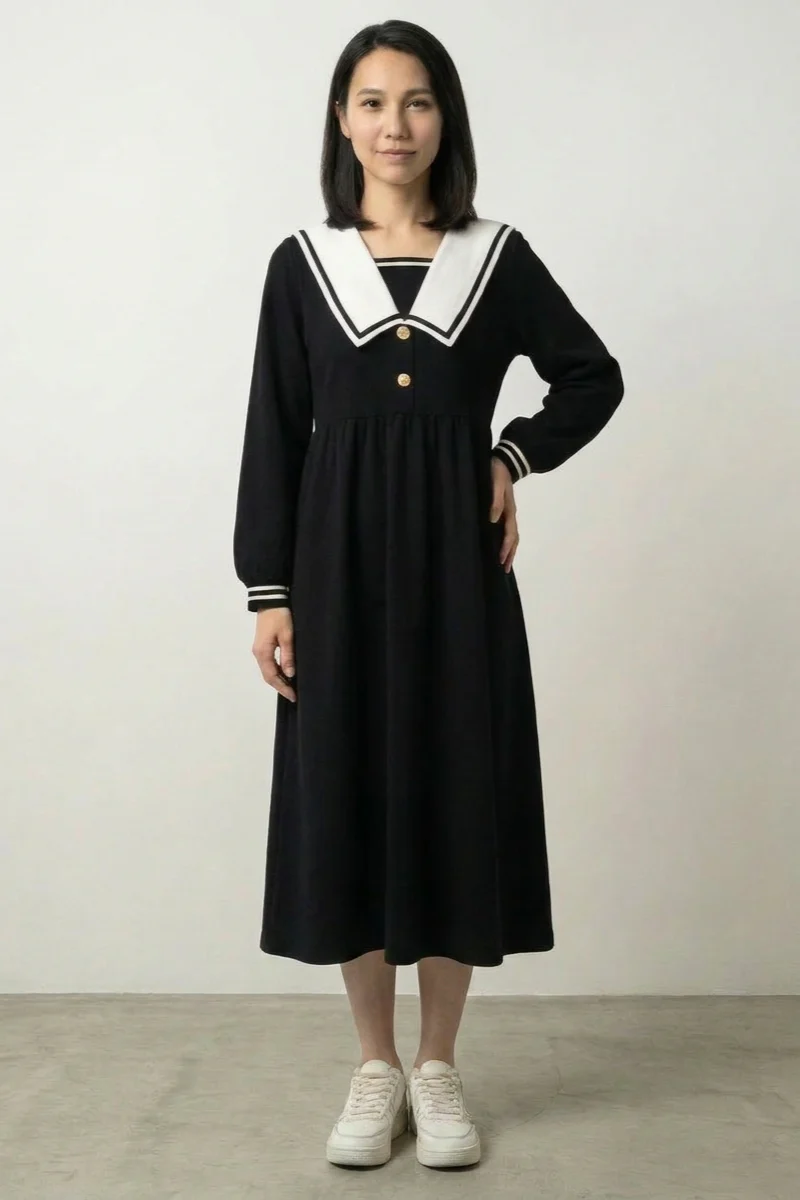
Sashiko is the old word for the running stitch — sashi for pierce, ko for small — the technique Japanese textile workers used for centuries to reinforce indigo workwear with quiet white lines. The dress doesn't carry the stitch itself, but it carries the same logic: black ground, white accent, nothing more. The oversized sailor collar drops cleanly over the shoulders in cream-white wool blend, edged with two thin parallel stripes that echo the seifuku — the school uniform that ran through Japanese fashion from Meiji-era merchant marines into Tokyo Harajuku street style a century later. Two small gold buttons close the bib, a single thin gold-stripe band runs at the inner neckline. The rest is matte black knit, falling clean to mid-calf.
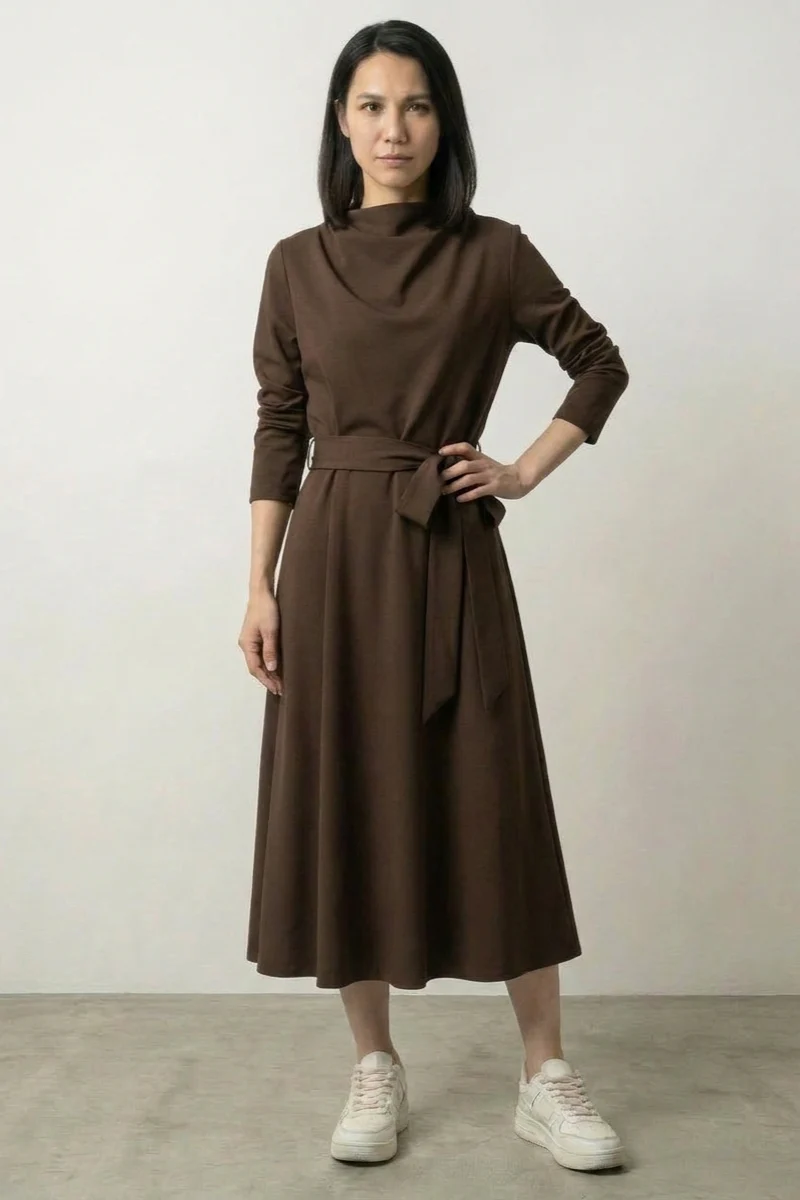
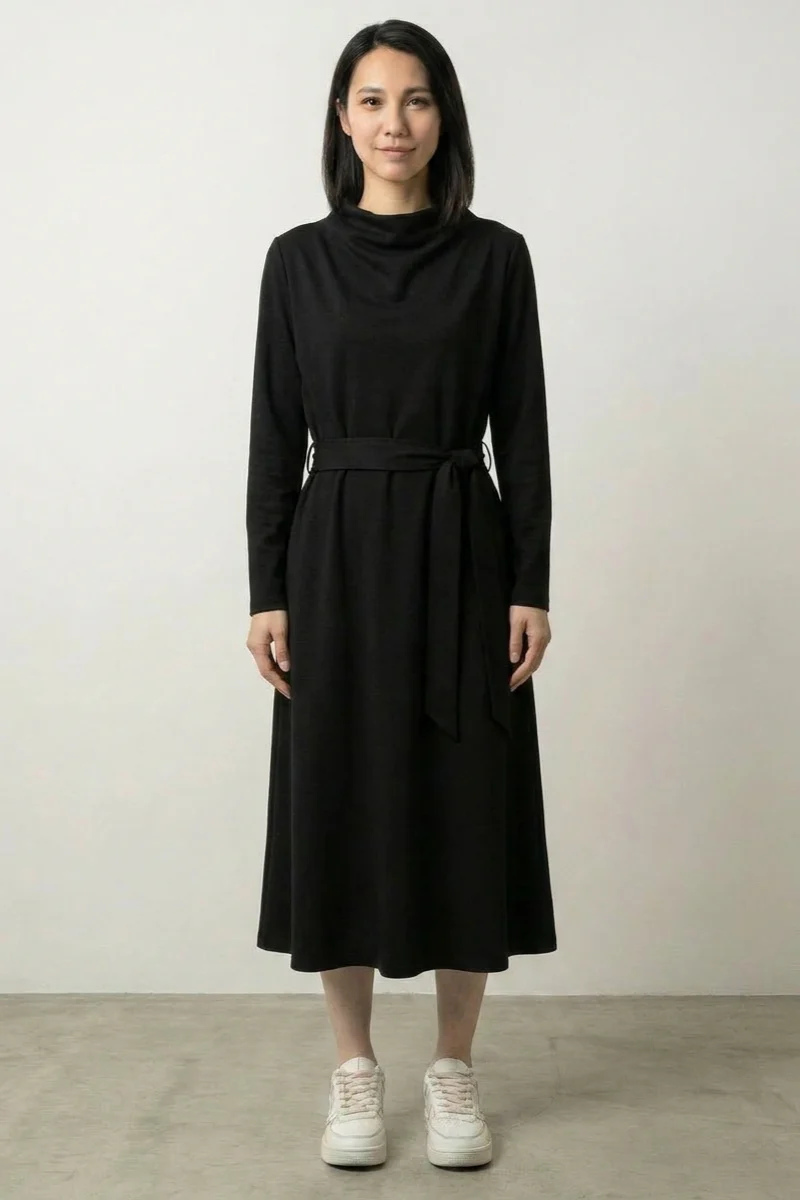
The cut sits empire-line: fitted across the bodice, gathered just under the bust, then released into a soft A-line skirt that falls to the lower calf. Long blouson sleeves end in matching cream-and-stripe cuffs. The fabric is a heavyweight knit — closer to a knit dress than to a poplin schoolgirl piece — with enough body to hold its shape through a long day. Sizes run S, M, L and XL. The cut runs slim through the bodice, generous through the skirt; size by chest measurement.
You get the dress as a single piece, the sailor collar attached, the gold buttons functional. The black holds its tone through regular wear and gentle cold-water hand-washing. No costume packaging, no plastic accessory clutter, no school-uniform ironic framing. Just one knit dress that reads quietly seifuku-inspired without ever asking to be a uniform.
Wear it with white sneakers and bare ankles for everyday, with leather Mary-Janes and tights for evening. It pairs as easily with a cropped wool coat in winter as it does with a denim jacket in spring, and the cream-on-black collar does enough work that you can keep the rest of the outfit pared down. The seifuku reference stays in the cut, not in the styling — bare hair, bare neck, no tie, no schoolgirl ribbon. Read it as Tokyo modernism with one good idea borrowed from a hundred-year-old uniform.
Description
Black Sailor Collar Dress with White Trim and Soft Empire Waist
Sashiko is the old word for the running stitch — sashi for pierce, ko for small — the technique Japanese textile workers used for centuries to reinforce indigo workwear with quiet white lines. The dress doesn't carry the stitch itself, but it carries the same logic: black ground, white accent, nothing more. The oversized sailor collar drops cleanly over the shoulders in cream-white wool blend, edged with two thin parallel stripes that echo the seifuku — the school uniform that ran through Japanese fashion from Meiji-era merchant marines into Tokyo Harajuku street style a century later. Two small gold buttons close the bib, a single thin gold-stripe band runs at the inner neckline. The rest is matte black knit, falling clean to mid-calf.
The cut sits empire-line: fitted across the bodice, gathered just under the bust, then released into a soft A-line skirt that falls to the lower calf. Long blouson sleeves end in matching cream-and-stripe cuffs. The fabric is a heavyweight knit — closer to a knit dress than to a poplin schoolgirl piece — with enough body to hold its shape through a long day. Sizes run S, M, L and XL. The cut runs slim through the bodice, generous through the skirt; size by chest measurement.
You get the dress as a single piece, the sailor collar attached, the gold buttons functional. The black holds its tone through regular wear and gentle cold-water hand-washing. No costume packaging, no plastic accessory clutter, no school-uniform ironic framing. Just one knit dress that reads quietly seifuku-inspired without ever asking to be a uniform.
Wear it with white sneakers and bare ankles for everyday, with leather Mary-Janes and tights for evening. It pairs as easily with a cropped wool coat in winter as it does with a denim jacket in spring, and the cream-on-black collar does enough work that you can keep the rest of the outfit pared down. The seifuku reference stays in the cut, not in the styling — bare hair, bare neck, no tie, no schoolgirl ribbon. Read it as Tokyo modernism with one good idea borrowed from a hundred-year-old uniform.